

Orchestrator
NEWTON
Routes tasks to project workspaces and specialist agents.
AI engineering
Memorable names make responsibilities visible. Scientists identify the function of an agent; planets identify the project workspace in which the work takes place.
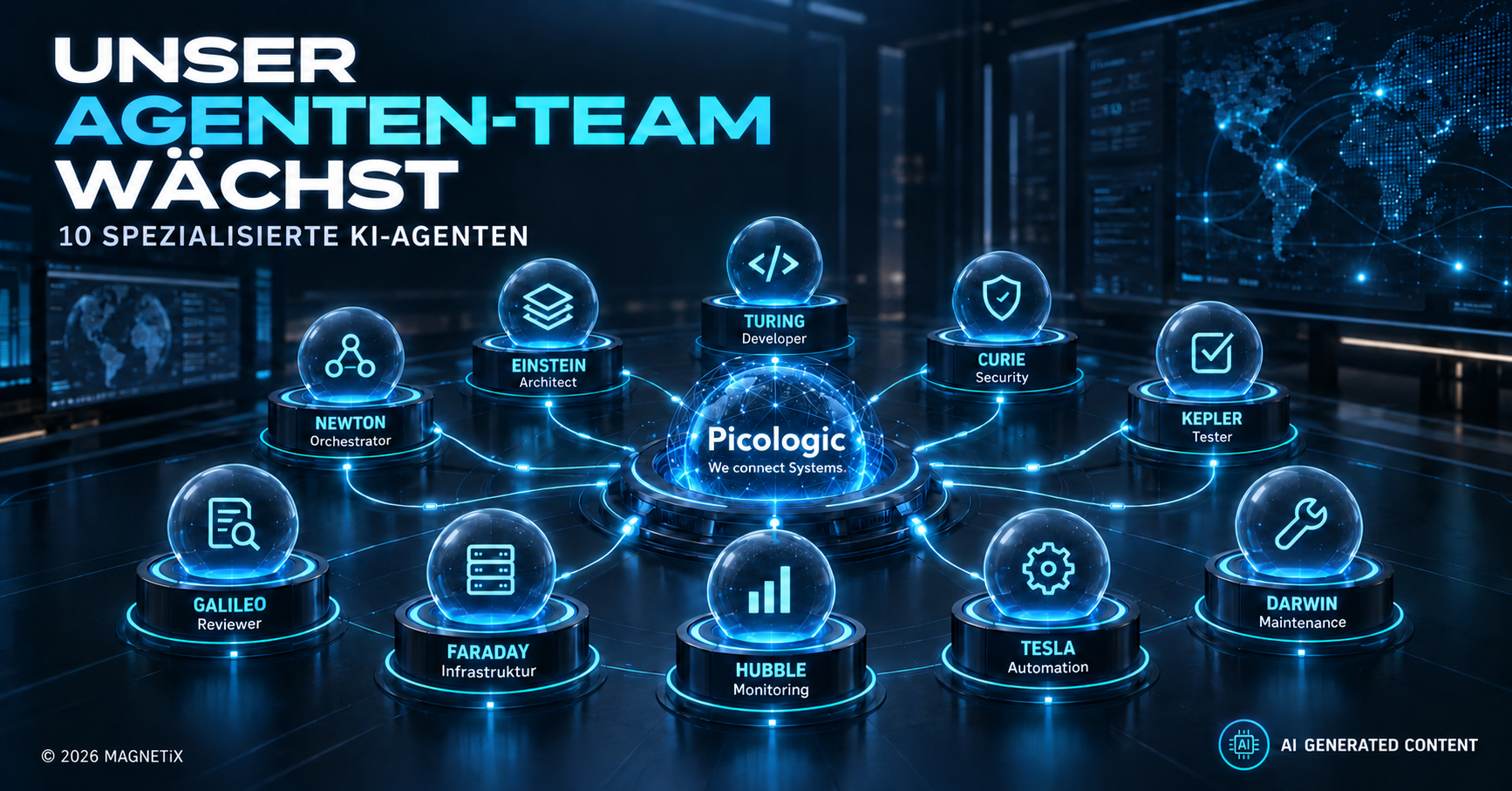
NEWTON coordinates the system. The other agents receive bounded assignments and return traceable results.
Orchestrator
Routes tasks to project workspaces and specialist agents.
Architecture
Checks architecture, dependencies and effects across repositories.
Development
Implements code and clearly defined technical changes.
Security
Checks permissions, secrets, privacy and vulnerabilities.
Testing
Runs tests, builds and quality checks.
Review
Reviews diffs, acceptance criteria and pull requests.
Infrastructure
Handles servers, containers, networks and deployments.
Monitoring
Observes logs, metrics, errors and availability.
Automation
Builds CI/CD flows, schedules and recurring processes.
Maintenance
Handles updates, refactoring and technical evolution.
A planet is not another AI personality. It is a clear label for a repository or project area.
EARTH
MARS
VENUS
JUPITER
SATURN
MERCURY
Tasks move through defined stages. Critical changes remain subject to human approval.
Capture and route the task
Check architecture and dependencies
Implement the change
Testing and security review
Prepare final review
NEWTON: Assign the Eventhacker task on MARS to TURING. Then have KEPLER test it, CURIE check security and GALILEO review the pull request.
Names describe operational responsibilities. They do not imply that decisions are made without human accountability.